 Rural Free Delivery
Its Coming and Its Effect
Tap or Click the arrow to play audio
Before 1902, rural residents typically had to travel to a post office—often located in a town, in someone’s home, or in a general store—to pick up or drop-off their mail. Postmasters were often local storekeepers or community leaders. Mail was not delivered to individual rural homes. Some people may have paid private carriers for delivery.
Access to news, information, and economic opportunities was limited for rural populations.
Ellis County had many small post offices in rural communities. Many of those communities no longer exist.
Mail service was infrequent, especially in remote places.
Rural Free Delivery was officially established in 1896 and made permanent in 1902. It provided free delivery of mail directly to rural homes and farms for the first time. The program bridged the communication gap between urban and rural areas, bringing newspapers, magazines, and mail to remote homes and fostering a sense of connection within communities. It allowed farmers to sell their crops more effectively, and because of demand for more reliable delivery, it contributed to the development of better roads in rural areas.
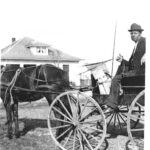
Mail carriers used horse-drawn wagons to deliver mail along established routes.
The service quickly expanded after its introduction, with thousands of rural residents petitioning for routes.