 Life Outside the Farm
Tap or Click the arrow to play audio
Farm children in the early 1900s did not have set school schedules. Their schooling schedules were largely determined by the demands of the agricultural calendar. They typically attended school during shorter winter and summer terms, with breaks in the spring and fall to help with planting and harvesting.
Chores still had to be done. But it wasn’t all work, the children did have some time for fun such as playing games and fishing.
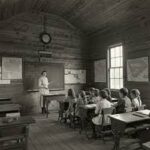
Rural schools were usually a one-room schoolhouse, accessible by foot or horse-drawn carriage. A single teacher taught subjects like reading, writing, arithmetic, geography, and moral instruction to students aged 6 to 16. The teacher, often a young woman, was not only an educator but also a disciplinarian, nurse, and counselor.
Furnished with wooden desks, a blackboard, a potbelly stove for heat, and kerosene lamps or large windows for light. Students brought their own lunches in pails and helped with chores like fetching water or wood. American flags and portraits of presidents adorned the walls, instilling a sense of patriotism and civic duty.
After 1900, schools in larger towns in the county attracted older students from nearby farms.
In rural Texas in the early 1900s, churches were the backbone of their community. Many church buildings, especially in isolated rural areas were small, unadorned wooden buildings that brought neighbors together and frequently served multiple purposes as schools, community centers, social event centers, and places of worship.
In small towns different religious denominations often shared a space with each congregation assigned particular Sundays, reflecting practicality and close-knit community.
Social life at the time centered around community events, work-based cooperation, and religious gatherings that offered a reprieve from the hard and isolated life on the farm. A lack of modern infrastructure like telephones and good roads made travel difficult, so most socializing took place within one’s immediate community.
Community events and socials were held at local churches or schools. Quilting bees and other crafts were skilled activities, and women would gather to work on them together, a diversion from a lonely and chore-filled life.
Visits to friends and family were often a rare treat.