Tap or Click the arrow to listen to the story and scroll down for pictures
In the early 1900s, the tack room was an important part of a Texas farm or ranch. Horses and mules provided transportation and the power needed to plow fields, haul supplies, and move livestock. The tack room was where saddles, bridles, reins, bits, harnesses, collars, ropes, and other equipment were stored, cared for, and repaired.
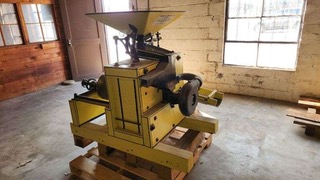
The tack room at the Ellis County Rural Heritage Farm has an additional story to tell. Housed in the room directly behind the tack room is a Williams Burr Mill, connecting the building to another essential part of early Texas farm life—the production of cornmeal.
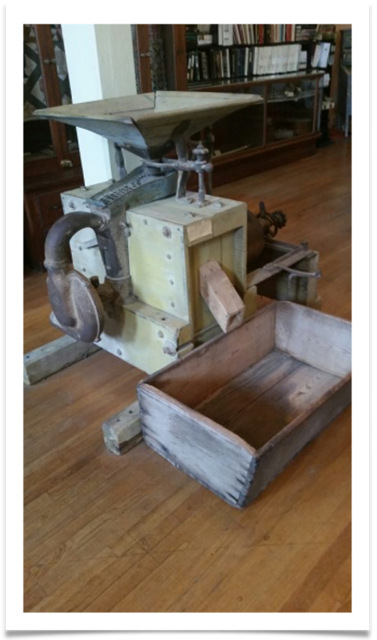
This particular gristmill was purchased in 1918 by T. A. Sissom of Avalon, Texas, just south of Dallas. Sissom used the mill to grind cornmeal until 1942. Corn was an important crop for many Texas farms, and a gristmill such as this one allowed farmers to turn their harvested corn into meal that could be used to feed their families and livestock.
The mill is a New Williams Burr Mill, a high-quality mill manufactured in several sizes. This particular mill has a 20-inch grindstone and bears the serial number C7265. Williams mills were known for their durable construction and effective grinding mechanism. 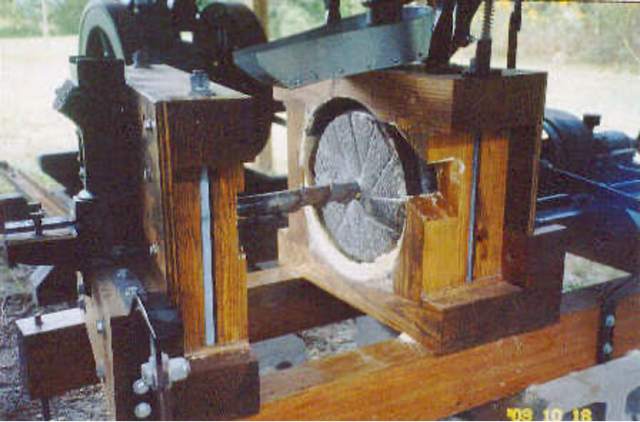 The Meadows Company, a subsidiary of International Harvester, later continued producing mills with workings very similar to those of the Williams mills, although later models used stainless-steel cases.
After serving the Sissom family for many years, the mill was donated by Mrs. Cliff Sissom to the Ellis County Museum. In 2023, the Ellis County Museum donated the mill to the Ellis County Rural Heritage Farm, where it could once again become part of the story of rural life in Ellis County.
Together, the tack room and the room behind it tell a broader story about how a farm worked. The tack room represents the horses, mules, and equipment that provided the muscle for farm work, while the Williams Burr Mill represents the processing of the crops that sustained the farm and its people. These two spaces offer a glimpse into a time when much of what a family needed was produced, maintained, and repaired right on the farm.