 Modernization of
the Rural Farm
Tap or Click the arrow to play audio
Life on a rural farm in Ellis County before electricity and telephones (roughly before the 1930s – 1940s), was tough, physically demanding, and often lonely, but it was also tightly knit, with a strong sense of community and family. Survival required skill, grit, and cooperation, and people lived much closer to the land and each other than today.
Nearly all farming tasks—plowing, planting, harvesting—were done by hand or with the help of horses or mules.
There was no electricity. Homes were lit with kerosene lamps or candles. Once the sun went down, most work and socializing ended.
Meals were cooked on wood-burning stoves, which also served as the home’s primary heat source in winter. Without refrigeration, people used techniques like canning, drying, smoking, and salting to preserve food.
Water came from wells, hand pumps, or nearby creeks. There was no indoor plumbing. Outhouses were standard.
Without phones or radios news traveled slowly, often by only word of mouth. Telephones were rare until the mid-1900s.
Many farms were miles from neighbors and isolated. Especially in bad weather, families could go days or weeks with little contact outside their home.
Families depended heavily on themselves and each other. Every member had chores, from children to the elderly.
Hot Texas summers without fans or air conditioning made work and life tough.
However, in the early 1900s, farming machinery began to replace the horse and mule and many long-time practices, allowing farmers to be more productive. But further change was on the way..
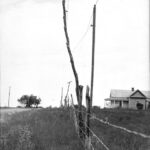
In 1935, only 2 percent of Texas farms had electricity. The Rural Electrification Administration of 1936 created a loan program that allowed local farmer cooperatives to contract to have power and telephone lines extended to their farms. This would dramatically affect the quality of life on the farm and connect it to nearby communities. Utility poles started to dot the rural landscape. Conveniences that city dwellers had already been enjoying gradually found their way to the rural farm, although many were still not affordable to every farm family. But as technology improved and prices came down, farm life began a decades-long movement toward what we have today.