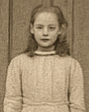
as remembered by Mary when she was 8 years-old
Tap or Click the arrow to listen to the story and scroll down for pictures
Our farm sat on the deep, rich black clay that made Ellis County the cotton capital of Texas in the early 1900s. Rows of bare wood-post fences stretched across the fields. 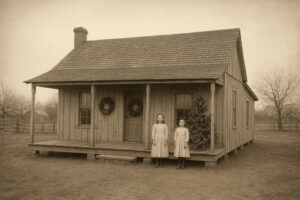 The nearest road was a rutted dirt path leading toward town. From the porch, you could see the faint glow of the lights from Waxahachie’s courthouse square if the night was clear.
The farmhouse was a simple dogtrot-style structure—two rooms with a central breezeway—though our family had walled in the breezeway years earlier to make a larger common room.
I woke up before the sun on Christmas morning because the cold was pinching my nose. The north wind had blown hard all night, and our old farmhouse always let the cold in no matter how many quilts Mama piled on us. I could hear the boards creaking and the stove popping in the front room, which meant Papa was already up putting wood in the firebox.
My little sister, Anna, whispered, “Do you think Santa came?” I didn’t want to wait another second, so I told her, “Well, he isn’t gonna come in here and tell us, so let’s go see.”
We tiptoed across the cold floor where Mama had stuffed rags under the door to keep dust from blowing in. 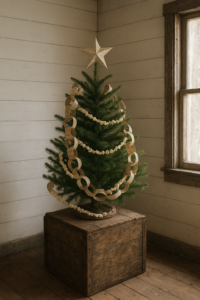 The cedar tree stood in the corner of the front room on top of an old crate. We had cut it near Waxahachie Creek two days ago. It still smelled sharp and sweet, so strong you could smell it all over the house. The paper chains we made from the Waxahachie Daily Light fluttered a little when the wind hit the wall, and Anna’s popcorn strings were drooping because she couldn’t stop eating them while she strung them.
Our stockings—Papa’s old wool socks—hung by the stove. Mine had a funny lump in the bottom. “Go on,” Mama said from the rocking chair. “Let’s see what Santa brought.”
I reached in and pulled out an orange first. I held it close to my nose. It smelled like warm sunshine. We only ever had oranges at Christmas, so I saved it for later. Then came a handful of peanuts from our own field and a peppermint stick wrapped in wax paper. At the very bottom, under everything else, was a little wooden horse Papa had carved when I wasn’t looking. It even had pencil eyes and a real string tail Mama tied on.
Anna got a rag doll with yarn hair the same color as hers. She hugged it like it might run away.
Papa came in from the barn with frost in his beard. “Cows are fed,” he said. “Chickens too. Coldest morning we’ve had this winter.” But he was smiling, and when Papa smiled on Christmas, I always felt like the world was right.
Mama made breakfast—hot biscuits and eggs—and even let us open the jar of peach preserves we were supposed to save. The stove warmed the whole room until it felt like summer inside.
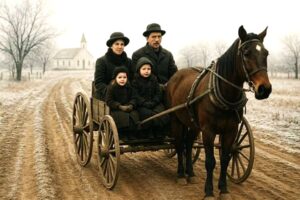 After breakfast we got bundled up and climbed into the wagon to ride to the little church down the road. The wheels clattered on the frozen ruts, and Papa wrapped the reins around his hand to keep them from slipping. When we got to the church, the windows were fogged from all the people inside breathing and trying to get close to the stove.
The children did their recitations, and when it was all over, we lined up for our brown paper treat sacks. Mine had another orange, some pecans, and candy that stuck to the paper. I didn’t care. It was Christmas candy.
We played with cousins in the yard after church. My wooden horse already had dirt on its legs. Anna wanted me to make it a stable out of sticks, but we had to go home so Mama could start dinner.
She cooked a roast chicken, mashed sweet potatoes, and cornbread dressing that smelled so good I kept sneaking in the kitchen until she swatted at me with her apron. The windows fogged up again from all the cooking, and the whole house smelled like warm bread and pepper gravy.
After dinner, Uncle Henry and Aunt Ella came by in their wagon. The grown-ups talked outside about cotton prices and boll weevils—grown-ups always talked about cotton and boll weevils—but we kids played tag around the barn until our hands got numb.
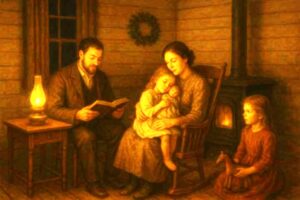 When everybody finally went home, the sky was getting dark. Papa lit the kerosene lamp, and we all sat close to the stove. He read the Christmas story from the Bible while Mama rocked my sister, who fell asleep with her doll pressed to her cheek.
I held my wooden horse and felt the warmth of the fire on my legs. Outside, the prairie was quiet except for a coyote yipping far off. The wind rattled the windows, but inside, everything was soft and warm and still.
It was the kind of night you remember even when you’re grown.
And that was Christmas on our little Ellis County farm in 1913.